
Sewage Cleanup
Toilet Overflow Cleanup in Ann Arbor: A Homeowner Guide
By Voda Tri-County Restoration · · 6 min read
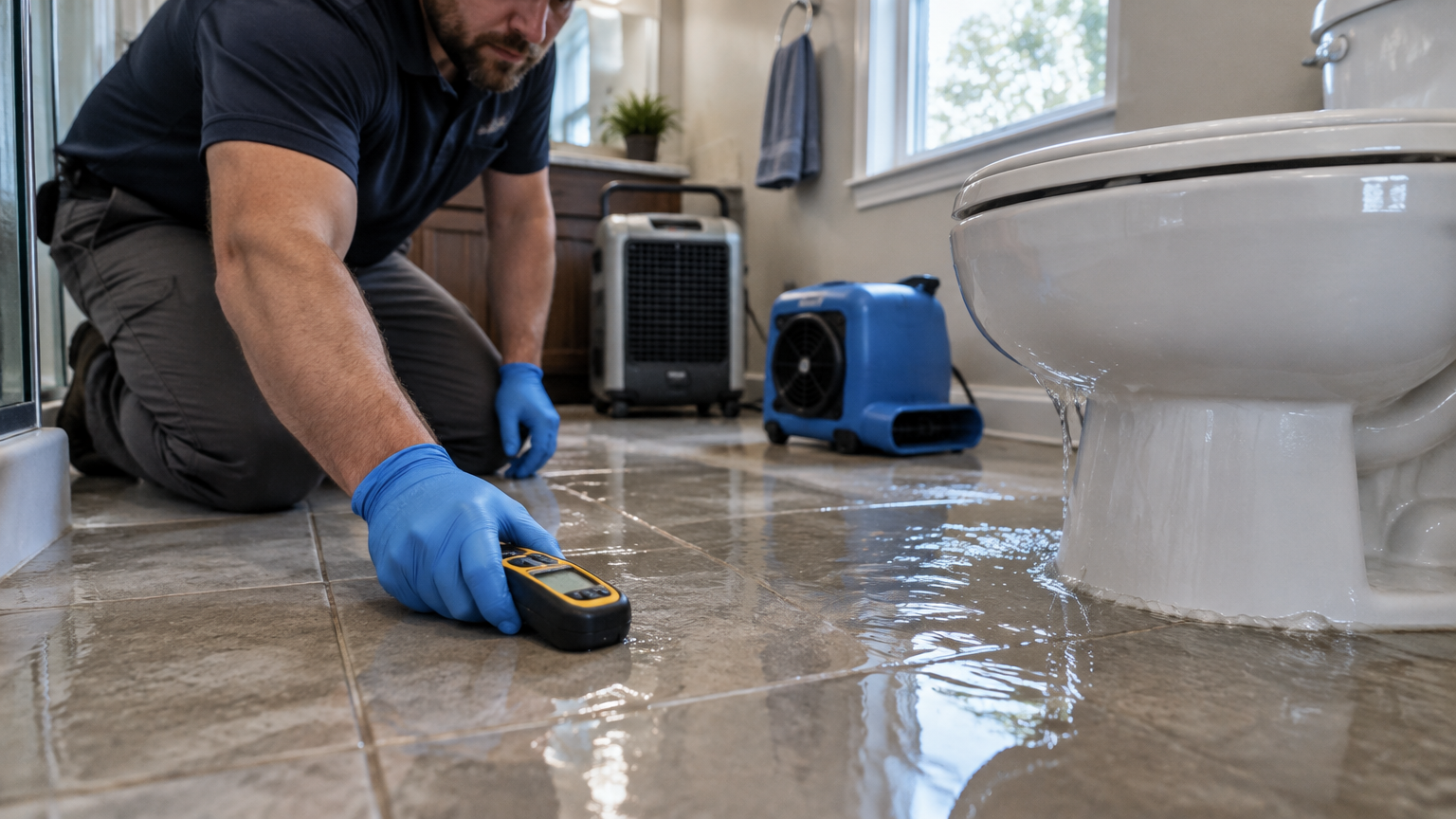
Need toilet overflow cleanup in Ann Arbor? Learn what to do first, when the water counts as sewage, and how pros clean, sanitize, and dry your bathroom.
Toilet overflow cleanup in Ann Arbor: what to do first
Water spilling over the rim of a toilet is one of those moments nobody plans for. Maybe it's a clog, maybe the tank won't stop running, or maybe water is coming up from the drain on its own. Toilet overflow cleanup in Ann Arbor is something we help homeowners with all year, and the steps you take in the next hour can make a real difference in how much of your bathroom, and the room below it, ends up needing work.
This guide covers how to stop the water, how to tell whether you're dealing with clean water or sewage, what not to do, and what professional cleanup actually involves.
Stop the water and keep everyone safe
Before you worry about the floor, focus on stopping the flow and keeping people out of the mess.
- Turn off the water supply valve behind the toilet. It's usually a small oval handle near the floor. Turn it clockwise until it stops.
- If the valve is stuck or the water keeps coming, shut off the main water valve for the house.
- If water is spreading toward outlets, cords, or a space heater, turn off power to that area at the breaker only if you can reach it without standing in water.
- Keep kids and pets out of the bathroom and any hallway the water reached.
- Take photos and video of the toilet, the floor, and any ceilings or walls below before you clean or move anything.
Is it clean water or sewage? Why it matters
Not every toilet overflow is the same. If the water came from the tank or a running fill valve and never touched the bowl, it may start out relatively clean. Water that came out of the bowl is a different story, and anything that backs up from the drain or sewer line should be treated as sewage.
Here's the tricky part: even water that starts out clean picks up bacteria as it sits on a bathroom floor and soaks into grout, subfloor, and drywall. The longer it sits, the more contaminated it becomes. That's why most toilet overflows are treated as contaminated water, and why cleanup involves sanitizing, not just mopping.
If more than one drain is backing up at the same time, such as a toilet and a tub or a basement floor drain, the problem may be in the main sewer line. Stop using water in the house, call a plumber to clear the line, and then call a sewage backup cleanup crew for the mess it left behind.
What not to do after a toilet overflow
When you're staring at a wet bathroom floor, it's tempting to grab towels and a bucket and get it over with. A few common moves can make things worse:
- Don't keep flushing to see if the clog cleared. Each flush can send more water onto the floor.
- Don't use a household vacuum or a regular carpet cleaner on the water.
- Don't touch contaminated water or soaked items without gloves, boots, and eye protection.
- Don't leave wet bath mats, rugs, or towels piled on the floor. They hold moisture against the subfloor.
- Don't assume the floor is dry because the tile looks dry. Water often runs under the toilet base, behind the vanity, and down into the ceiling below.
Where toilet overflow water goes
Bathroom floors look waterproof, but they rarely are. Water slips through grout lines, around the toilet flange, and under baseboards and vanity cabinets. In a second-floor bathroom it can soak the subfloor and show up as a stain on the kitchen or living room ceiling below. In older homes around Ann Arbor, Ypsilanti, Saline, and Dexter, it can also find its way into plaster walls and finished basements.
If that hidden moisture isn't dried, it can lead to soft subflooring, loose tile, lingering odors, and eventually mold. A musty smell in the weeks after an overflow is a sign something stayed wet, and it's worth having checked by a team that handles mold remediation.
How professional toilet overflow cleanup works
Every bathroom is different, but here's what the process usually looks like with Voda Tri-County Restoration.
Assessment and containment
The crew looks at where the water came from, how far it traveled, and what materials it reached. Moisture meters and thermal imaging help trace water under flooring and inside walls or ceilings. If the water is contaminated, the work area is contained so it doesn't spread to the rest of the house.
Extraction and removal
Standing water comes out first. Porous materials that soaked up contaminated water, like carpet, pad, and sometimes drywall or baseboards, may need to be removed and disposed of properly. Hard surfaces that can be saved are cleaned.
Sanitizing and odor removal
Affected surfaces are cleaned and treated with antimicrobial products. Deodorizing goes after the odor at the source instead of covering it up, so the bathroom smells like a bathroom again.
Drying and repairs
Air movers and dehumidifiers dry the subfloor, framing, and wall cavities, and the crew checks moisture readings as drying progresses. Once everything is dry, repairs can begin, from baseboards and drywall to flooring and paint. If the overflow came from a clog or a broken part, you'll still want a plumber to fix the cause so it doesn't happen again.
A few words about insurance
Whether a toilet overflow is covered depends on your policy and the cause. A sudden overflow from a failed fill valve may be handled differently than a sewer backup, which often requires a specific endorsement, and mold is frequently limited or excluded. Coverage varies by policy, so call your insurance company or agent to confirm what applies to you.
Take photos before cleanup, keep receipts for any emergency expenses, and write down when the overflow happened. Voda Tri-County Restoration documents the loss and can work with your insurance company, but your policy and your adjuster have the final word on coverage.
Toilet overflow cleanup FAQ
Can I clean up a small toilet overflow myself? If a little water came from the tank, you caught it right away, and it stayed on tile, a careful cleanup with disinfectant may be enough. If water came from the bowl or the drain, reached carpet, drywall, or the ceiling below, or keeps coming back, it's worth having a professional take a look.
Why does my bathroom still smell after I cleaned up? Water may be trapped under the flooring, behind the vanity, or in the subfloor. An odor that lingers usually means something is still wet or contaminated below the surface.
Do you help outside Ann Arbor? Yes. Voda Tri-County Restoration serves Ann Arbor and communities across Washtenaw County and Southeast Michigan, including Ypsilanti, Saline, Dexter, and Chelsea.
Get 24/7 toilet overflow cleanup help in Ann Arbor
A toilet overflow is unpleasant, but you don't have to sort it out alone. Voda Tri-County Restoration offers sewage backup cleanup and water damage restoration in Ann Arbor around the clock, along with mold remediation and fire and smoke damage restoration if your situation calls for it.
Water on the bathroom floor right now? Call Voda Tri-County Restoration at (248) 692-4391 for 24/7 help with toilet overflow cleanup, sanitizing, and drying.