
Water Damage
Burst Pipe Cleanup in Ann Arbor: A Winter Homeowner Guide
By Voda Tri-County Restoration · · 6 min read
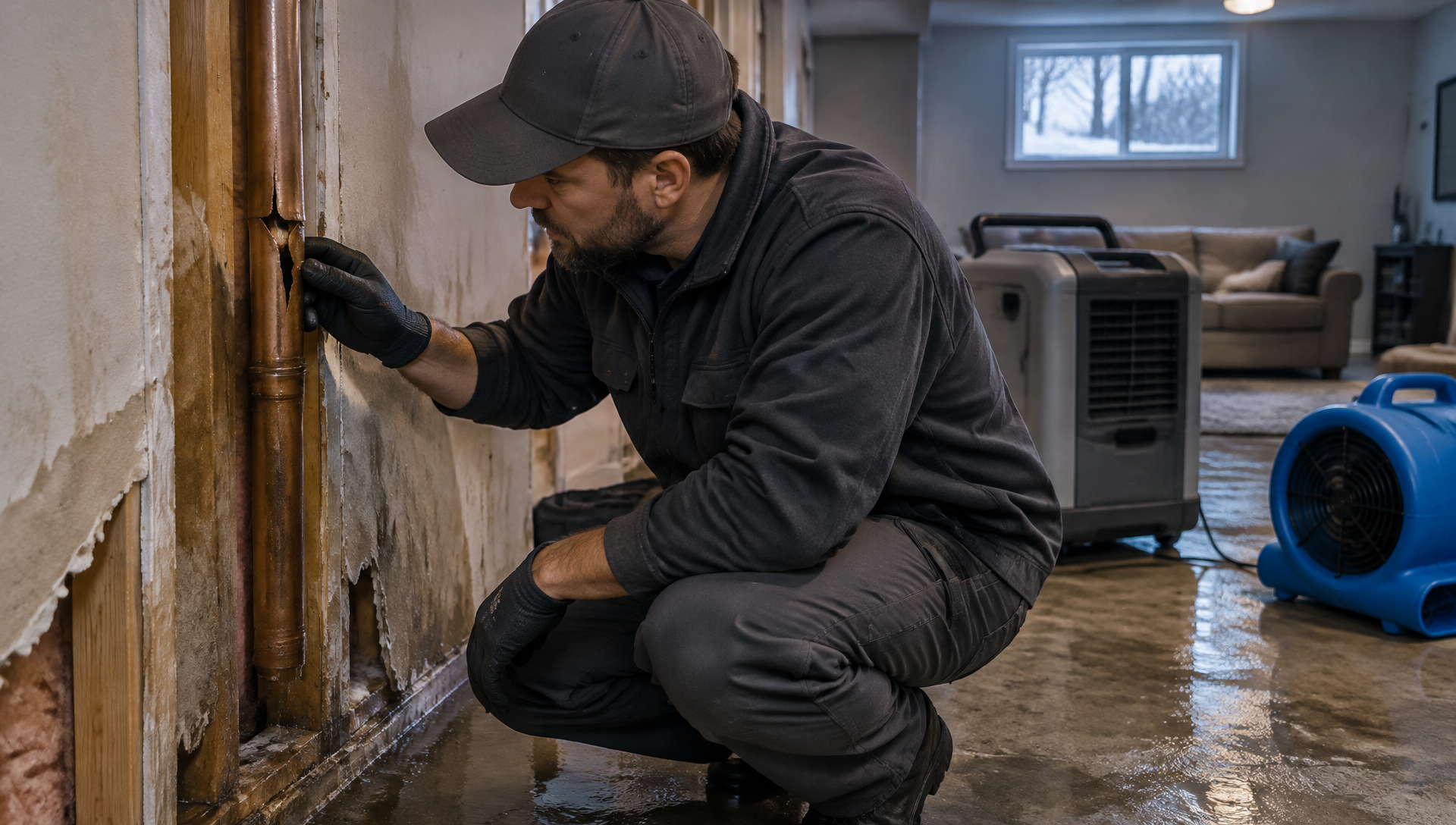
Need burst pipe cleanup in Ann Arbor? Learn what to do first, how pros dry walls and floors, and how to prepare for an insurance call when pipes freeze.
Why burst pipe cleanup in Ann Arbor can't wait
If you're reading this with water on the floor, you're not alone. Burst pipe cleanup in Ann Arbor gets busy every winter, because our cold snaps are hard on plumbing in basements, crawlspaces, garages, and exterior walls. The good news is that what you do in the next little while can make a real difference in how much of your home has to be opened up, dried, and repaired later.
This guide covers the first steps, what professional cleanup involves, and common questions homeowners ask.
Why pipes burst in Michigan winters
When water freezes inside a pipe, it expands. That pressure has to go somewhere, and it often splits the pipe at a weak point, sometimes a few feet away from where the ice actually formed. Here's the tricky part: many pipes don't start leaking until the ice thaws. That's why so many homeowners in Ann Arbor, Ypsilanti, Saline, and Dexter find the damage on a sunny afternoon after a deep freeze, or when they come home from a trip.
Pipes in unheated or poorly insulated spaces are most at risk. Think basement rim joists, crawlspaces, attached garages, kitchen sinks on outside walls, and hose bib lines that were never shut off for the season.
First steps after a pipe bursts
Take a breath. Then work through these steps in order, and only do what you can do safely.
- Shut off the main water valve. It's usually in the basement near the water meter.
- If water is near outlets, appliances, or your electrical panel, turn off power at the breaker only if you can reach it without standing in water.
- Stay out from under sagging ceilings. Wet drywall can give way without much warning.
- Open a faucet on the lowest level to help drain the remaining water out of the lines.
- Take photos and video of the burst pipe, the standing water, and every affected room before you move anything.
- Call a restoration company so drying can start as soon as possible.
What not to do
In a stressful moment it's easy to grab the wrong tool. A few things tend to make burst pipe damage worse:
- Don't use an open flame or a torch to thaw a frozen pipe.
- Don't run a household vacuum on standing water.
- Don't pull up wet flooring or cut into walls before the damage has been assessed.
- Don't assume a box fan will dry the wall cavities. Surfaces can feel dry while the materials behind them are still wet.
How professional burst pipe cleanup works
Once the water is off, the job shifts from stopping the leak to drying the structure. Here's what that process usually looks like with Voda Tri-County Restoration.
Assessment and moisture mapping
Water from a burst pipe rarely stays where you can see it. It travels under flooring, behind baseboards, and down through ceilings into the rooms below. Technicians use moisture meters and thermal imaging to trace where the water went and compare wet materials with dry areas. That map guides the rest of the plan, so drying equipment goes where it's actually needed.
Water extraction
Standing water comes out first. Extraction equipment pulls water out of carpet, pad, and hard floors far more effectively than towels or a shop vac.
Structural drying and monitoring
Next, air movers and commercial dehumidifiers go to work on the walls, floors, and framing. The crew checks moisture readings during the drying process and adjusts the equipment as conditions change. The goal is to reach a proper dry standard before anything gets closed back up, not just to make the room feel dry.
Sometimes, removing a section of wet drywall, insulation, or carpet pad is the right call so the cavity behind it can dry.
Repairs and putting your home back together
After the structure is dry, the focus moves to repairs: drywall, trim, flooring, and paint. You'll still need a plumber to repair the pipe itself, and it's smart to ask them about insulation or rerouting if that pipe sits in a cold spot.
When a burst pipe leads to mold or contamination
Clean water from a supply line can still cause trouble if it sits too long. Wet drywall, wood, and carpet pad that stay damp can start growing mold, often out of sight. If you notice a musty smell or discoloration in the weeks after a leak, that's worth having checked by a team that handles mold remediation.
It's also worth knowing that not every winter water problem is clean water. If a frozen or broken line affects a drain or sewer pipe, or water backs up from a floor drain, that water should be treated as contaminated, and the cleanup needs extra precautions. Keep kids and pets away and don't handle soaked items without protection.
A few words about insurance
Many homeowners policies treat a sudden, accidental pipe burst differently from a slow leak or damage tied to maintenance. Coverage varies by policy, so call your insurance company or agent to confirm what applies to your situation. Policies often have separate rules or exclusions for mold and for sewer or drain backups.
Either way, a few habits help: take photos before cleanup starts, keep receipts for any emergency expenses, and save the damaged pipe section if your plumber removes it. Voda Tri-County Restoration documents the loss and can work with your insurance company, but your policy and your adjuster have the final word on coverage.
How to prevent the next burst pipe
Once things are dry, a little prep can help you avoid a repeat this winter.
- Disconnect garden hoses and shut off the interior valves for outdoor spigots.
- Insulate pipes in basements, crawlspaces, garages, and along exterior walls.
- Open cabinet doors under sinks on outside walls during a hard freeze so warm air can reach the pipes.
- Let a faucet drip on the coldest nights.
- Keep the heat on if you travel, and ask someone to check the house while you're away.
Burst pipe cleanup FAQ
Can I clean up a small burst pipe leak myself? If it's a little clean water you caught right away, maybe. If water reached drywall, flooring, or the level below, have moisture readings taken so nothing stays wet inside the structure.
How long does drying take after a burst pipe? It depends on how much water was released, how long it sat, and what materials got wet. Regular moisture readings show when the structure is actually dry, which is more reliable than going by a set number of days.
Will my insurance pay for burst pipe cleanup? It depends on your policy and the cause of the damage. Call your insurance company or agent to confirm your coverage, and document everything before cleanup begins.
Do you help outside Ann Arbor? Yes. Voda Tri-County Restoration serves Ann Arbor and communities across Washtenaw County and Southeast Michigan, including Ypsilanti, Saline, Dexter, and Chelsea.
Get 24/7 burst pipe help in Ann Arbor
A burst pipe is stressful, but you don't have to sort it out alone. Voda Tri-County Restoration offers water damage restoration in Ann Arbor around the clock, along with mold remediation, sewage backup cleanup, and fire and smoke damage restoration if your situation calls for it.
Water on the floor right now? Call Voda Tri-County Restoration at (248) 692-4391 for 24/7 help with burst pipe cleanup and drying.